Survivor stories
A place for survivors to share what happened after they left.
In immediate danger? Call 000 · 1800RESPECT — 1800 737 732
Warrant Wednesday
A survivor-story series sharing lived experiences of post-separation abuse, legal abuse, coercive control and systems failure. Stories may be shared anonymously and are reviewed before publication.
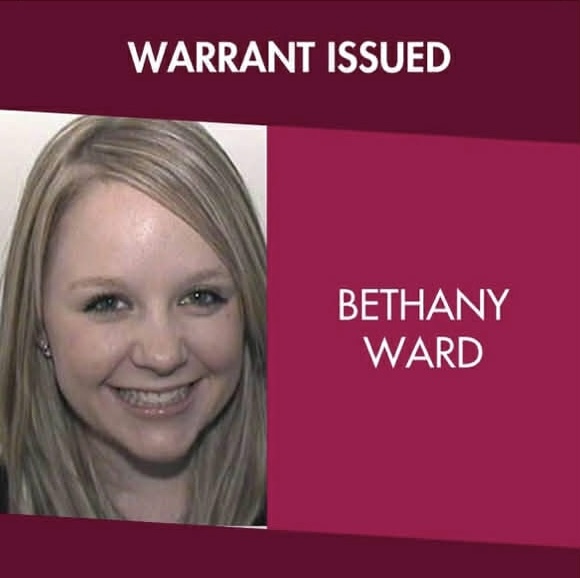
The image at the centre of Bethany's lived experience and advocacy story.
Context
Bethany did not start Warrant Wednesday. Warrant Wednesday was done to her.
"Warrant Wednesday" is a weekly initiative run by police departments, particularly across Australia in Victoria and New South Wales. Each week, police publish photos and details of individuals with outstanding warrants on social media, asking the public to help locate them and encouraging the named person to turn themselves in.
It is a public-facing law enforcement campaign. The intent is to crowdsource the tracking of people wanted by police. The effect, for the people pictured, is mass public exposure — their face, their name and the existence of a warrant pushed out to thousands of strangers, shared, screenshotted and commented on.
Bethany became one of those faces.
"They tell you to leave. Bethany left. Then her face was published online with the word 'WARRANT' across it."
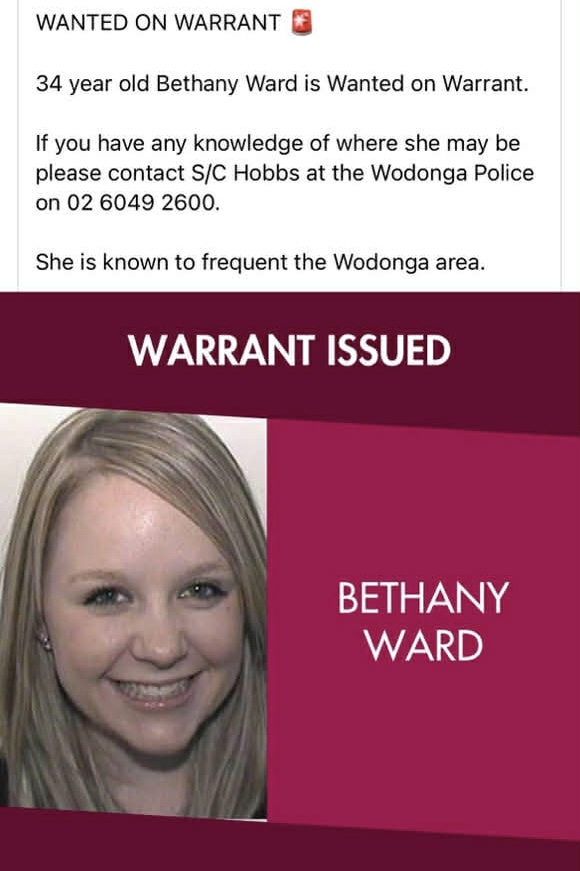
The Warrant Wednesday post that placed Bethany's face in front of the public.
How she ended up on it
After Bethany left an abusive relationship, extreme allegations were made against her regarding her three children. Before investigations were completed, her children were removed from her care, and she was cut off from all contact with them while child protection and legal processes unfolded.
During this period, she spent time in Queensland to recover and protect her mental health while proceedings were underway. While she was out of Victoria, applications for intervention orders were made against her by her former partner and several of his family members.
She was not personally served with notice of one court date relating to an intervention order application and did not know she was required to appear. Because she did not attend court, a warrant was issued against her.
That warrant — not the result of any criminal behaviour — was enough for her photo and details to be published as part of the police Warrant Wednesday rotation. Her face was suddenly in front of the public, alongside genuinely wanted offenders, with no context for what had actually happened to her.
Why it matters
Bethany's appearance on Warrant Wednesday is not the story of a wanted criminal. It is the story of how easily a survivor of abuse can be funnelled through systems — child protection, intervention orders, courts, and ultimately police publicity — until her face is the one the public sees, not her abuser's.
She was subjected to intense scrutiny, repeated court processes, drug testing, hair follicle testing, investigations and ongoing legal battles in order to defend herself against allegations that were false, fabricated to intentionally cause harm. The warrant that put her on a Warrant Wednesday post sat at the end of that chain.
This is what post-separation abuse, legal abuse and systems abuse can look like in practice: paperwork becoming a weapon, a mother quickly recast as a threat, and a survivor's face printed onto a police graphic and broadcast to the public while her abuser remains invisible.
Bethany left. She did what survivors are told to do. But leaving did not bring immediate safety. Instead, she lost her children for three and a half years and fought to get them back. Her children have since been returned to her care, but her legal battle continues — and the Warrant Wednesday image of her still exists on the internet.
This page reclaims that image. It uses the same words police used against her — "Warrant Wednesday" — to tell the truth underneath the post: that survivors of post-separation abuse are sometimes the ones publicly named, while the abuse itself goes unnamed.
"Warrant Wednesday is what happens when a survivor takes the post that was meant to humiliate her and turns it into a platform for truth."
Today
A place for survivors to share what happened after they left.
Exposing the role police, courts, child protection and legal processes can play in post-separation abuse.
Helping survivors feel seen, believed and less alone.
Building awareness and advocacy for better system responses.
Stories coming soon.
Survivor stories are reviewed carefully before publication. Be the first —share yours.
A wider pattern
Bethany's story is personal, but the patterns are broader. Survivors across Australia describe similar experiences: allegations, court misuse, systems abuse, child-related coercive control, and years spent trying to prove the truth. Warrant Wednesday exists to make those stories visible.
You can choose a pseudonym, withhold identifying details, and keep your name private. We will never publish without your written consent.
Submissions are reviewed by our team before publication. We will not publish identifying details about children or named individuals where doing so could create legal or safety risk. You can withdraw your story at any time.
Stay informed
Share your story, apply to be interviewed, or explore resources about post-separation abuse and legal abuse.
If you are in immediate danger, call 000. For domestic, family and sexual violence support in Australia, contact 1800RESPECT on 1800 737 732.
This page shares lived experience and advocacy content. It does not provide legal advice. Some details have been intentionally limited to protect privacy and ongoing legal matters.